<?xml version="1.0" encoding="UTF-8"?>
<rss version="2.0"
	xmlns:content="http://purl.org/rss/1.0/modules/content/"
	xmlns:wfw="http://wellformedweb.org/CommentAPI/"
	xmlns:dc="http://purl.org/dc/elements/1.1/"
	xmlns:atom="http://www.w3.org/2005/Atom"
	xmlns:sy="http://purl.org/rss/1.0/modules/syndication/"
	xmlns:slash="http://purl.org/rss/1.0/modules/slash/"
	>

<channel>
	<title>Harvard Baroque Chamber Orchestra</title>
	<atom:link href="http://www.harvardbaroque.org/?feed=rss2" rel="self" type="application/rss+xml" />
	<link>http://www.harvardbaroque.org</link>
	<description>Just another WordPress weblog</description>
	<lastBuildDate>Thu, 26 Apr 2012 15:18:53 +0000</lastBuildDate>
	<language>en</language>
	<sy:updatePeriod>hourly</sy:updatePeriod>
	<sy:updateFrequency>1</sy:updateFrequency>
	<generator>http://wordpress.org/?v=3.1.2</generator>
		<item>
		<title>Bach&#8217;s Brandenburgs</title>
		<link>http://www.harvardbaroque.org/?p=138</link>
		<comments>http://www.harvardbaroque.org/?p=138#comments</comments>
		<pubDate>Thu, 26 Apr 2012 15:18:53 +0000</pubDate>
		<dc:creator>admin</dc:creator>
				<category><![CDATA[Featured]]></category>

		<guid isPermaLink="false">http://www.harvardbaroque.org/?p=138</guid>
		<description><![CDATA[The Harvard Baroque Chamber Orchestra wraps up its season and salutes Arts First with a salvo of the last four magnificent Brandenburg Concertos of Johann Sebastian Bach. We&#8217;ll start with the Third, which features a subset of the ensemble &#8211; one on a part &#8211; allowing us to get all that great dialogue out with [...]]]></description>
			<content:encoded><![CDATA[<p>The Harvard Baroque Chamber Orchestra wraps up its season and salutes Arts First with a salvo of the last four magnificent  Brandenburg Concertos of Johann Sebastian Bach.</p>
<p>We&#8217;ll start with the Third, which features a subset of the ensemble &#8211; one on a part &#8211;  allowing us to get all that great dialogue out with a maximum of clarity and virtuosity. Then the Fifth, where Sarahs Darling and Paysnick will wistfully duet<br />
while Matthew Hall will creates a brand new universe using only a harpsichord and two hands. In the Sixth, mirror violists Lucy Caplan and Claire Roberts-Thomson will make you see double, backwards, and even cross-eyed, and finally, in the Fourth, Apollo (aka Jesse Irons on violin) has an explosive face-off with two-fluted Pan (Emily O&#8217;Brien and Mufan Chan on recorder).</p>
<p>If you like Bach… come join us!</p>
<p><a href="http://www.facebook.com/events/362865187083392/">Brandenburg Concertos nos. 3, 4, 5, and 6</a><br />
Memorial Church Sanctuary<br />
Saturday, April 28, 4:00 PM<br />
Free admission</p>
]]></content:encoded>
			<wfw:commentRss>http://www.harvardbaroque.org/?feed=rss2&#038;p=138</wfw:commentRss>
		<slash:comments>0</slash:comments>
		</item>
		<item>
		<title>Bach and His Worlds</title>
		<link>http://www.harvardbaroque.org/?p=128</link>
		<comments>http://www.harvardbaroque.org/?p=128#comments</comments>
		<pubDate>Sun, 19 Feb 2012 19:38:50 +0000</pubDate>
		<dc:creator>admin</dc:creator>
				<category><![CDATA[Featured]]></category>

		<guid isPermaLink="false">http://www.harvardbaroque.org/?p=128</guid>
		<description><![CDATA[The Harvard Baroque Chamber Orchestra and the Harvard University Choir combine for an afternoon of Bach at his most dynamic and energetic. Whether embodying the sacred world of his motets and cantatas, or the secular one of his celebrated Brandenburg concerti, Bach pushes himself and his musicians to the limit, in search of power and [...]]]></description>
			<content:encoded><![CDATA[<p>The Harvard Baroque Chamber Orchestra and the Harvard University Choir<br />
combine for an afternoon of Bach at his most dynamic and energetic.<br />
Whether embodying the sacred world of his motets and cantatas, or the<br />
secular one of his celebrated Brandenburg concerti, Bach pushes<br />
himself and his musicians to the limit, in search of power and<br />
brilliance of expression.</p>
<p>Brandenburg Concerto nos. 1 and 3<br />
Motet: &#8220;Singet dem Herrn ein neues Lied&#8221; BWV 225<br />
Cantata: &#8220;Gott der Herr ist Sonn und Schild&#8221; BWV 79</p>
<p>Memorial Church Sanctuary<br />
Sunday, March 4, 4 PM</p>
]]></content:encoded>
			<wfw:commentRss>http://www.harvardbaroque.org/?feed=rss2&#038;p=128</wfw:commentRss>
		<slash:comments>0</slash:comments>
		</item>
		<item>
		<title>Musikalische Malerei</title>
		<link>http://www.harvardbaroque.org/?p=111</link>
		<comments>http://www.harvardbaroque.org/?p=111#comments</comments>
		<pubDate>Mon, 31 Oct 2011 19:25:44 +0000</pubDate>
		<dc:creator>admin</dc:creator>
				<category><![CDATA[Featured]]></category>

		<guid isPermaLink="false">http://www.harvardbaroque.org/?p=111</guid>
		<description><![CDATA[On November 6, join us on a journey through the wild and wonderful music of 17th and 18th-century Austria, where composers became fascinated with representing scenes from life in their compositions. Biber&#8217;s &#8220;Battalia&#8221; and Schmelzer&#8217;s &#8220;Fechtschule&#8221; both experiment &#8211; in strikingly modern ways &#8211; with creating ferocious musical battles on stage, while Vivaldi&#8217;s &#8220;Al Santo [...]]]></description>
			<content:encoded><![CDATA[<p>On November 6, join us on a journey through the wild and wonderful music of 17th and 18th-century Austria, where composers became fascinated with representing scenes from life in their compositions. Biber&#8217;s &#8220;Battalia&#8221; and Schmelzer&#8217;s &#8220;Fechtschule&#8221; both experiment &#8211; in strikingly modern ways &#8211; with creating ferocious musical battles on stage, while Vivaldi&#8217;s &#8220;Al Santo Sepolcro&#8221; and Biber&#8217;s &#8220;Pauenkirchfahrt&#8221; evoke the atmosphere of a cathedral and the image of approaching churchgoers. The concert ends with pure music speaking for itself &#8211; Georg Muffat&#8217;s beautiful Armonico Tributo and W. A. Mozart&#8217;s Missa Brevis in D (featuring the Harvard University Choir).</p>
<p>The Harvard Baroque Chamber Orchestra<br />
featuring The Harvard University Choir</p>
<p>Join us for an evening of 17th and 18th century &#8220;musical paintings&#8221; from Salzburg and Vienna<br />
&#8230; from the battlefield to the cathedral, the flamboyant to the sublime &#8230;</p>
<p>Sunday, November 6th, 7 PM<br />
Memorial Church, Harvard Yard<br />
$10 general admission | $5 students and seniors<br />
Tickets available at the Harvard Box Office and at the door</p>
<p>PERFORMING</p>
<p>BIBER: Pauenkirchfahrt, Battalia<br />
CALDARA: Concertante<br />
SCHMELZER: Fechtschule<br />
MUFFAT: Sonata V: Armonico Tributo<br />
VIVALDI: Al Santo Sepolcro<br />
MOZART: Missa Brevis in D, with the Harvard University Choir</p>
]]></content:encoded>
			<wfw:commentRss>http://www.harvardbaroque.org/?feed=rss2&#038;p=111</wfw:commentRss>
		<slash:comments>0</slash:comments>
		</item>
		<item>
		<title>Nicholas McGegan</title>
		<link>http://www.harvardbaroque.org/?p=124</link>
		<comments>http://www.harvardbaroque.org/?p=124#comments</comments>
		<pubDate>Fri, 28 Oct 2011 18:12:35 +0000</pubDate>
		<dc:creator>admin</dc:creator>
				<category><![CDATA[Featured]]></category>

		<guid isPermaLink="false">http://www.harvardbaroque.org/?p=124</guid>
		<description><![CDATA[Hailed by the London Independent as “one of the finest baroque conductors of his generation” and The New Yorker as “an expert in 18th-century style,” Nicholas McGegan McGegan website, music director of the San Francisco-based Philharmonia Baroque Orchestra, will lead a master class with the Harvard Baroque Chamber Orchestra and the University Choir on Monday, [...]]]></description>
			<content:encoded><![CDATA[<p>Hailed by the London Independent as “one of the finest baroque conductors of his generation” and The New Yorker as “an expert in 18th-century style,” Nicholas McGegan McGegan website, music director of the San Francisco-based Philharmonia Baroque Orchestra, will lead a master class with the Harvard Baroque Chamber Orchestra and the University Choir on Monday, November 7th at 4 p.m in Memorial Church.</p>
<p>Through nearly 25 years as its music director, Nicholas McGegan has established the Philharmonia Baroque Orchestra as the leading period performance band in America—and at the forefront of the “historical” movement worldwide thanks to notable appearances at Carnegie Hall, the London Proms, the Amsterdam Concertgebouw, and the International Handel Festival, Gottingen where he has been artistic director since 1991.</p>
<p>In Gottingen and with the Philharmonia Baroque McGegan has defined an approach to period style that sets the current standard: probing, serious but undogmatic, recognizing that the music of the past doesn’t belong in a museum or in academia but in vigorous engagement with an audience, for pleasure and delight on both sides of the footlights. Active in opera as well as the concert hall, McGegan was principal conductor of Sweden&#8217;s perfectly preserved 18th-century theatre Drottingholm from 1993-1996, running the annual festival there. And he has been a pioneer in the process of exporting historically informed practice beyond the small world of period instruments to the wider one of conventional symphonic forces, guest-conducting orchestras like the Concertgebouw, Suisse Romande, Halle, Chicago, Cleveland and Philadelphia, St. Louis, Toronto, and Sydney Symphonies, and the New York, Los Angeles, and Hong Kong Philharmonics, as well as opera companies like Covent  Garden, San Francisco, Santa Fe and Washington.</p>
<p>McGegan’s discography of over 100 releases includes the world premiere recording of Handel’s “Susanna,” which attracted both a Gramophone Award and Grammy nomination, and recent issues of the same composer’s “Solomon,” “Samson,” and “Acis and Galatea” (a rarity in that it unearths the little-known version adapted by Felix Mendelssohn). He is also credited with the first performance in modern times of Handel’s masterly but mislaid “Gloria.” And he has broken new ground in experimental dance-collaborations with Mark Morris, notably at festivals like Edinburgh, Ravinia and the Mostly Mozart Festival in New York. McGegan is committed to the next generation of musicians, frequently conducting and coaching students in residencies as part of the music programs at Yale and Juilliard.</p>
<p>Born in England, McGegan was educated at Cambridge and Oxford and taught at the Royal College of Music, London. In 2010 he was made an Officer of the Order of the British Empire (OBE) “for services to music overseas.” His awards also include the Halle Handel Prize, an honorary professorship at Georg-August University, Gottingen, and an official Nicholas McGegan Day, declared by the Mayor of San Francisco in recognition of two decades’ distinguished work with the Philharmonia Baroque.</p>
<p>Image credit: Josef Astor</p>
]]></content:encoded>
			<wfw:commentRss>http://www.harvardbaroque.org/?feed=rss2&#038;p=124</wfw:commentRss>
		<slash:comments>0</slash:comments>
		</item>
		<item>
		<title>Jean-Babtiste Lully</title>
		<link>http://www.harvardbaroque.org/?p=103</link>
		<comments>http://www.harvardbaroque.org/?p=103#comments</comments>
		<pubDate>Thu, 12 May 2011 04:09:17 +0000</pubDate>
		<dc:creator>admin</dc:creator>
				<category><![CDATA[Featured]]></category>

		<guid isPermaLink="false">http://www.harvardbaroque.org/?p=103</guid>
		<description><![CDATA[Lully, son of a working-class miller, was born in Florence, Italy. Lully had little education, but he learned basic techniques on the guitar, originally taught by a Franciscan friar of Florence. Later in France, he learned how to play the violin, and to dance. In 1646, he was discovered by Roger de Lorraine, the chevalier de Guise, son of Charles, Duke of [...]]]></description>
			<content:encoded><![CDATA[<p>Lully, son of a working-class miller, was born in <a title="Florence" href="http://en.wikipedia.org/wiki/Florence">Florence</a>, <a title="Italy" href="http://en.wikipedia.org/wiki/Italy">Italy</a>. Lully had little education, but he learned basic techniques on the <a title="Guitar" href="http://en.wikipedia.org/wiki/Guitar">guitar</a>, originally taught by a <a title="Franciscan" href="http://en.wikipedia.org/wiki/Franciscan">Franciscan</a> friar of Florence. Later in France, he learned how to play the <a title="Violin" href="http://en.wikipedia.org/wiki/Violin">violin</a>, and to dance. In 1646, he was discovered by Roger de Lorraine, the <em>chevalier</em> de Guise, son of <a title="Charles, Duke of Guise" href="http://en.wikipedia.org/wiki/Charles,_Duke_of_Guise">Charles, Duke of Guise</a>, and was taken to <a title="France" href="http://en.wikipedia.org/wiki/France">France</a>, where he entered the services of <a title="Anne, Duchess of Montpensier" href="http://en.wikipedia.org/wiki/Anne,_Duchess_of_Montpensier">Mademoiselle de Montpensier (<em>la Grande Mademoiselle</em>)</a> as a <a title="Scullery" href="http://en.wikipedia.org/wiki/Scullery">scullery</a>-boy and Italian-language teacher. With the help of this princess, his talent increased. He studied the theory of music under <a title="Nicolas Métru (page does not exist)" href="http://en.wikipedia.org/w/index.php?title=Nicolas_M%C3%A9tru&amp;action=edit&amp;redlink=1">Nicolas Métru</a>. It has been said that a scurrilous song on his patroness (the <a title="Doggerel" href="http://en.wikipedia.org/wiki/Doggerel">doggerel</a> he set to music refers to a &#8220;sigh&#8221; she produced while at stool) resulted in his dismissal. It is far more likely that he did not want to moulder out in the provinces with the exiled princess.</p>
]]></content:encoded>
			<wfw:commentRss>http://www.harvardbaroque.org/?feed=rss2&#038;p=103</wfw:commentRss>
		<slash:comments>0</slash:comments>
		</item>
		<item>
		<title>Gut strings</title>
		<link>http://www.harvardbaroque.org/?p=100</link>
		<comments>http://www.harvardbaroque.org/?p=100#comments</comments>
		<pubDate>Thu, 12 May 2011 04:03:46 +0000</pubDate>
		<dc:creator>admin</dc:creator>
				<category><![CDATA[Featured]]></category>

		<guid isPermaLink="false">http://www.harvardbaroque.org/?p=100</guid>
		<description><![CDATA[For a long period, catgut was the most common material for the strings of harps, lutes, violins, and violas, as well as other stringed musical instruments, as well as older marching snare drums; however, most musical instruments produced today use strings with cores made of other materials, generally steel or synthetic polymer. Gut strings are the natural choice for many classical and [...]]]></description>
			<content:encoded><![CDATA[<p>For a long period, catgut was the most common material for the <a title="Strings (music)" href="http://en.wikipedia.org/wiki/Strings_(music)">strings</a> of <a title="Harp" href="http://en.wikipedia.org/wiki/Harp">harps</a>, <a title="Lute" href="http://en.wikipedia.org/wiki/Lute">lutes</a>, <a title="Violin" href="http://en.wikipedia.org/wiki/Violin">violins</a>, and <a title="Viola" href="http://en.wikipedia.org/wiki/Viola">violas</a>, as well as other <a title="String instrument" href="http://en.wikipedia.org/wiki/String_instrument">stringed musical instruments</a>, as well as older marching snare drums; however, most musical instruments produced today use strings with cores made of other materials, generally steel or synthetic <a title="Polymer" href="http://en.wikipedia.org/wiki/Polymer">polymer</a>. Gut strings are the natural choice for many classical and baroque string players, and catgut strings are still most commonly preferred in concert-tension pedal/grand and some lever <a title="Harp" href="http://en.wikipedia.org/wiki/Harp">harps</a> because they give a richer, darker sound as well as withstanding high tension within low alto, tenor, and high-bass ranges.</p>
]]></content:encoded>
			<wfw:commentRss>http://www.harvardbaroque.org/?feed=rss2&#038;p=100</wfw:commentRss>
		<slash:comments>0</slash:comments>
		</item>
		<item>
		<title>HBCO: Back to Bach</title>
		<link>http://www.harvardbaroque.org/?p=3</link>
		<comments>http://www.harvardbaroque.org/?p=3#comments</comments>
		<pubDate>Wed, 09 Dec 2009 22:10:49 +0000</pubDate>
		<dc:creator>admin</dc:creator>
				<category><![CDATA[Featured]]></category>

		<guid isPermaLink="false">http://www.harvardbaroque.org/?p=3</guid>
		<description><![CDATA[I&#8217;m so excited to be starting in on the great St. John Passion of J.S. Bach! I&#8217;ve been wanting to perform this work ever since 1992, when as a young boy I went wandering in the forest one day. The pale sunlight seemed to retreat through the oak branches, driven back by dusk&#8217;s onslaught. Shivering, [...]]]></description>
			<content:encoded><![CDATA[<p>I&#8217;m so excited to be starting in on the great St. John Passion of J.S. Bach! I&#8217;ve been wanting to perform this work ever since 1992, when as a young boy I went wandering in the forest one day. The pale sunlight seemed to retreat through the oak branches, driven back by dusk&#8217;s onslaught. Shivering, I wrapped my traveling cloak tightly around me and quickened my pace towards grandmother&#8217;s cottage. Dry leaves crunched loudly under foot, the noise seeming to grow louder with each nervous step, until I could hear nothing but the dead leaves, imagined stalking predators, and my own heartbeat. And then&#8230; what was that? A new sound appeared at the edge of my awareness, as if it had always been there but never quite been noticed. I turned from the familiar path, following an instinct I hadn&#8217;t known I had, and crept up a small knoll, the other side of which revealed a great gathering of people, sound, and warm light. There were violins (though they sounded quite different from my own half-size Suzuki), cellos, recorders, oboes, and a choir singing the most magnificent, angelic music I had ever heard.</p>
]]></content:encoded>
			<wfw:commentRss>http://www.harvardbaroque.org/?feed=rss2&#038;p=3</wfw:commentRss>
		<slash:comments>0</slash:comments>
		</item>
		<item>
		<title>Links</title>
		<link>http://www.harvardbaroque.org/?p=67</link>
		<comments>http://www.harvardbaroque.org/?p=67#comments</comments>
		<pubDate>Wed, 09 Dec 2009 21:39:46 +0000</pubDate>
		<dc:creator>admin</dc:creator>
				<category><![CDATA[Links]]></category>

		<guid isPermaLink="false">http://www.harvardbaroque.org/?p=67</guid>
		<description><![CDATA[Here are some of HBCO&#8217;s friends on the web: Philharmonia Baroque Bach Society Orchestra]]></description>
			<content:encoded><![CDATA[<p>Here are some of HBCO&#8217;s friends on the web:</p>
<p><a href="http://www.philharmonia.org/" target="_self">Philharmonia Baroque</a></p>
<p><a href="http://www.hcs.harvard.edu/~bachsoc/" target="_blank">Bach Society Orchestra</a></p>
]]></content:encoded>
			<wfw:commentRss>http://www.harvardbaroque.org/?feed=rss2&#038;p=67</wfw:commentRss>
		<slash:comments>0</slash:comments>
		</item>
		<item>
		<title>Audio</title>
		<link>http://www.harvardbaroque.org/?p=57</link>
		<comments>http://www.harvardbaroque.org/?p=57#comments</comments>
		<pubDate>Thu, 10 Dec 2009 00:25:20 +0000</pubDate>
		<dc:creator>admin</dc:creator>
				<category><![CDATA[Audio]]></category>

		<guid isPermaLink="false">http://www.harvardbaroque.org/?p=57</guid>
		<description><![CDATA[A Vivaldi Concerto 1. Allegro (performed by Europa Galante)]]></description>
			<content:encoded><![CDATA[<p>A <a href="http://www.harvardbaroque.org/wp-content/uploads/2009/12/1-05-Concerto-I-1.-Allegro.mp3">Vivaldi Concerto 1. Allegro</a></p>
<p>(performed by Europa Galante)</p>
]]></content:encoded>
			<wfw:commentRss>http://www.harvardbaroque.org/?feed=rss2&#038;p=57</wfw:commentRss>
		<slash:comments>0</slash:comments>
<enclosure url="http://www.harvardbaroque.org/wp-content/uploads/2009/12/1-05-Concerto-I-1.-Allegro.mp3" length="3180443" type="audio/mpeg" />
		</item>
		<item>
		<title>Photos</title>
		<link>http://www.harvardbaroque.org/?p=54</link>
		<comments>http://www.harvardbaroque.org/?p=54#comments</comments>
		<pubDate>Thu, 10 Dec 2009 00:17:04 +0000</pubDate>
		<dc:creator>admin</dc:creator>
				<category><![CDATA[Photos]]></category>

		<guid isPermaLink="false">http://www.harvardbaroque.org/?p=54</guid>
		<description><![CDATA[Look at these great photos! These were taken by the wonderful Teresa Tam &#8211; check out her gallery by following the link. More stuff about photos. More stuff about photos. More stuff about photos. More stuff about photos. More stuff about photos.]]></description>
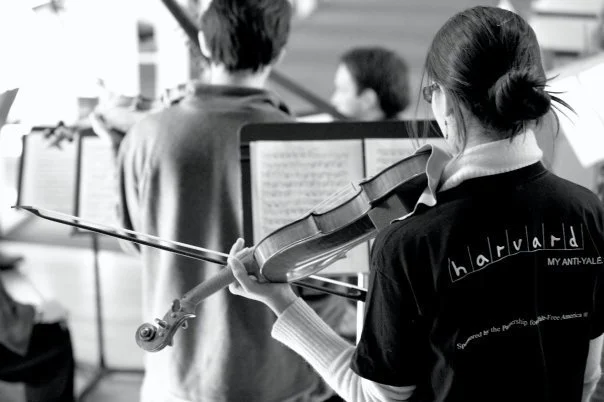
			<content:encoded><![CDATA[<p>Look at these great photos! These were taken by the wonderful <a href="http://www.teresatamstudio.com/" target="_blank">Teresa Tam</a> &#8211; check out her gallery by following the link. More stuff about photos. More stuff about photos. More stuff about photos. More stuff about photos. More stuff about photos.</p>
<p><a href="http://www.harvardbaroque.org/wp-content/uploads/2009/12/group-pose-crazy.jpg"><img class="alignnone size-thumbnail wp-image-49" title="group-pose-crazy" src="http://www.harvardbaroque.org/wp-content/uploads/2009/12/group-pose-crazy-150x150.jpg" alt="group-pose-crazy" width="150" height="150" /></a> <a href="http://www.harvardbaroque.org/wp-content/uploads/2009/12/sarah-playing.jpg"><img class="alignnone size-thumbnail wp-image-45" title="sarah-playing" src="http://www.harvardbaroque.org/wp-content/uploads/2009/12/sarah-playing-150x150.jpg" alt="sarah-playing" width="150" height="150" /></a> <a href="http://www.harvardbaroque.org/wp-content/uploads/2009/12/phoebe-smile.jpg"><img class="alignnone size-thumbnail wp-image-40" title="phoebe-smile" src="http://www.harvardbaroque.org/wp-content/uploads/2009/12/phoebe-smile-150x150.jpg" alt="phoebe-smile" width="150" height="150" /></a> <a href="http://www.harvardbaroque.org/wp-content/uploads/2009/12/megumi-sharon-playing-corre.jpg"><img class="alignnone size-thumbnail wp-image-34" title="megumi-sharon-playing-corre" src="http://www.harvardbaroque.org/wp-content/uploads/2009/12/megumi-sharon-playing-corre-150x150.jpg" alt="megumi-sharon-playing-corre" width="150" height="150" /></a> <a href="http://www.harvardbaroque.org/wp-content/uploads/2009/12/bill.jpg"><img class="alignnone size-thumbnail wp-image-29" title="bill" src="http://www.harvardbaroque.org/wp-content/uploads/2009/12/bill-150x150.jpg" alt="bill" width="150" height="150" /></a> <a href="http://www.harvardbaroque.org/wp-content/uploads/2009/12/juliana.jpg"><img class="alignnone size-thumbnail wp-image-20" title="juliana" src="http://www.harvardbaroque.org/wp-content/uploads/2009/12/juliana-150x150.jpg" alt="juliana" width="150" height="150" /></a> <a href="http://www.harvardbaroque.org/wp-content/uploads/2009/11/tatiana-violins.jpg"><img class="alignnone size-thumbnail wp-image-8" title="tatiana-violins" src="http://www.harvardbaroque.org/wp-content/uploads/2009/11/tatiana-violins-150x150.jpg" alt="tatiana-violins" width="150" height="150" /></a> <a href="http://www.harvardbaroque.org/wp-content/uploads/2009/11/juancarols.jpg"><img class="alignnone size-thumbnail wp-image-4" title="juancarols" src="http://www.harvardbaroque.org/wp-content/uploads/2009/11/juancarols-150x150.jpg" alt="juancarols" width="150" height="150" /></a></p>
]]></content:encoded>
			<wfw:commentRss>http://www.harvardbaroque.org/?feed=rss2&#038;p=54</wfw:commentRss>
		<slash:comments>0</slash:comments>
		</item>
	</channel>
</rss>